The World’s First
Pedal-to-Stand Desk
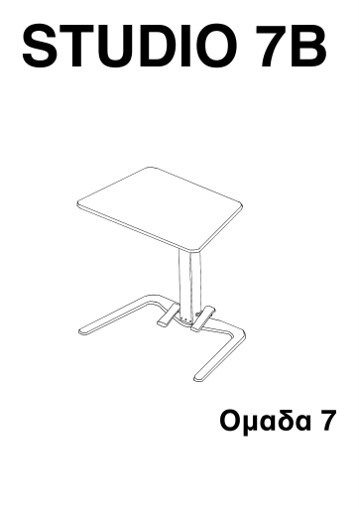
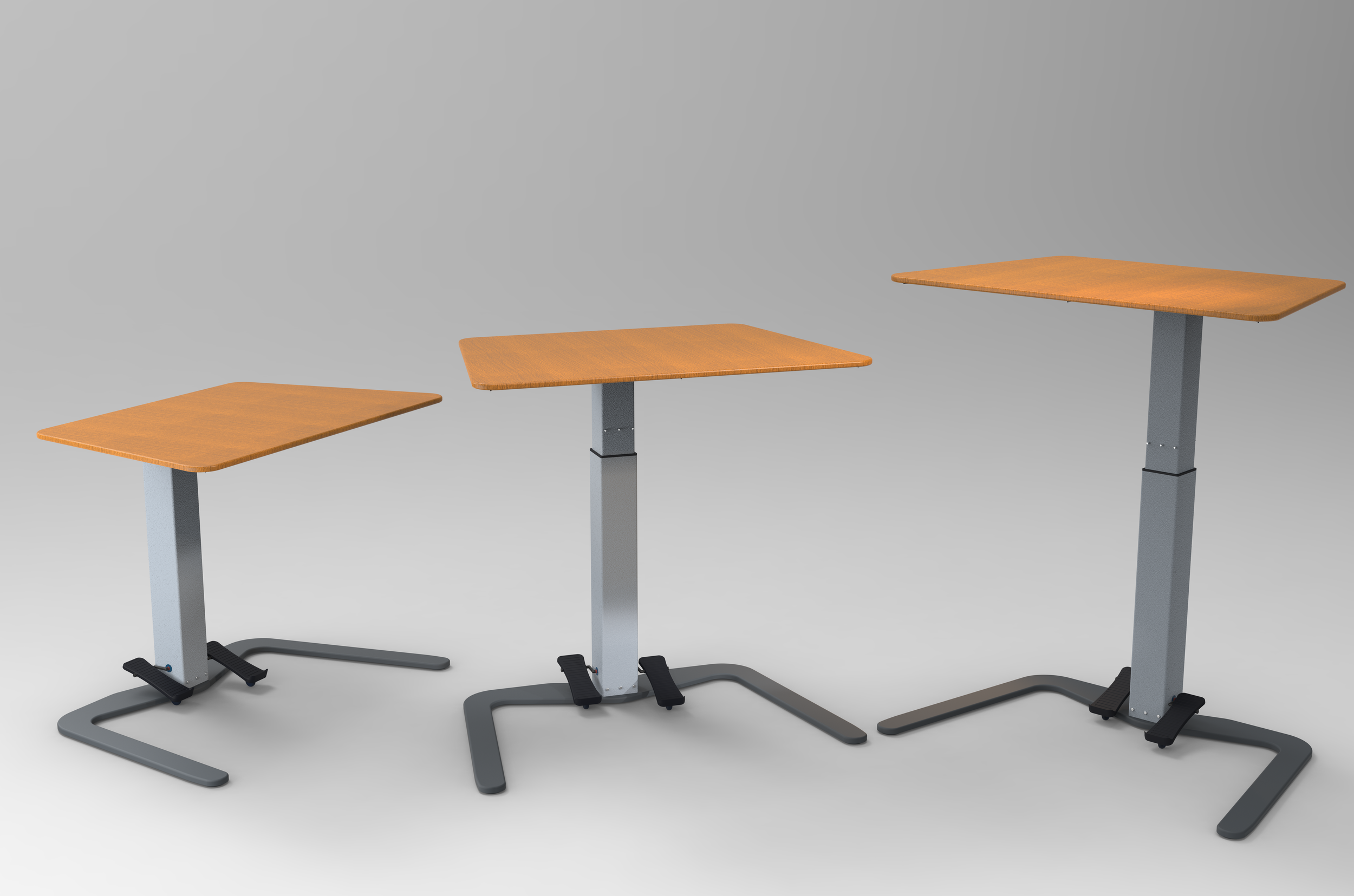
A sit-stand desk with a playful analog pedal mechanism, designed for users who rarely take advantage of the standing option of their desk
The objective is to design a portable, height-adjustable sit–stand desk that flat-packs and assembles tool-free, making it easy and enjoyable to re-build a healthy workspace during infrequent home relocations (around once a year).
Objective
My Role
Team Project (4 person)
Research
System Design
Prototyping
Motion Design
Prototyping
Tools
Sketchup
Creo parametric
Keyshot
3D printing
Ansys Granta Selector
Design duration
10 weeks
2025
Goals & design challenges
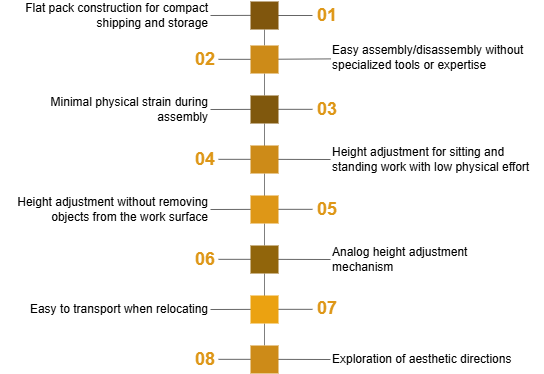
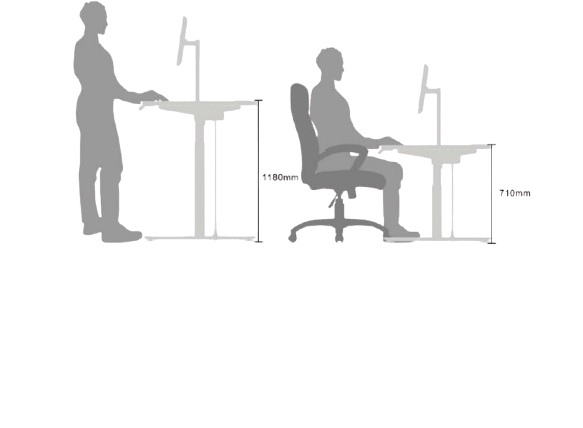
How might we enable people who move frequently to maintain a healthy sit-stand work routine with a flat-pack desk that is easy to assemble, adjust, and relocate?
The Solution
A compact sit–stand workstation designed to make healthy movement part of everyday work.
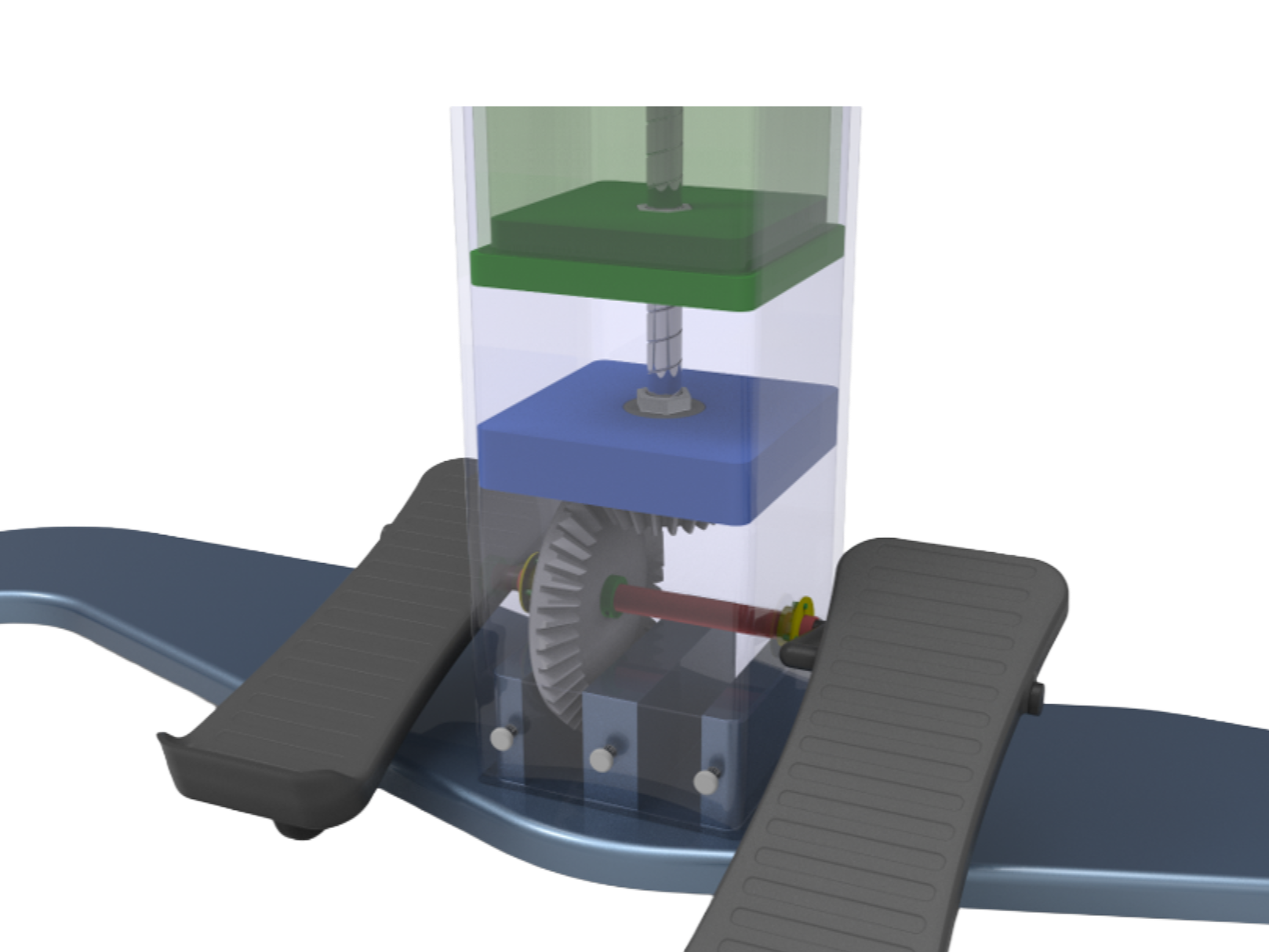
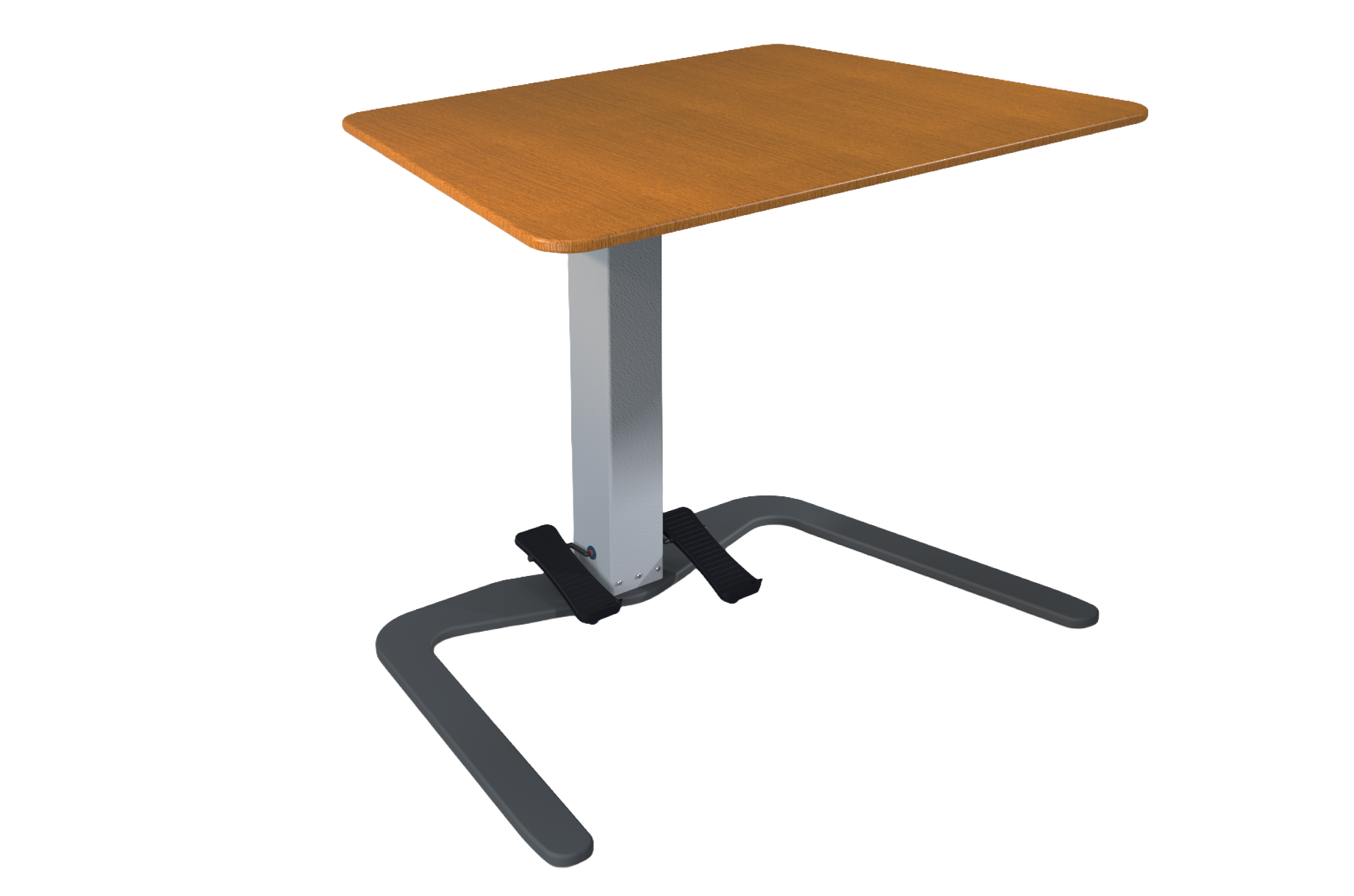
Its pedal‑driven mechanism lets users change height hands‑free, switching from sitting to standing in seconds with low physical effort.
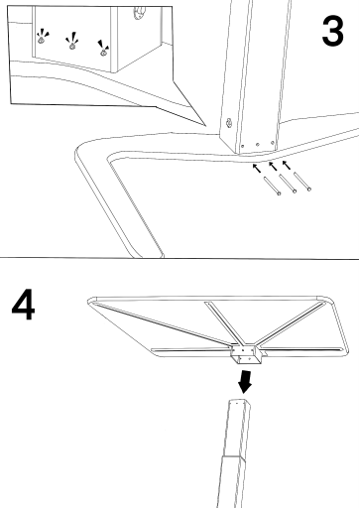
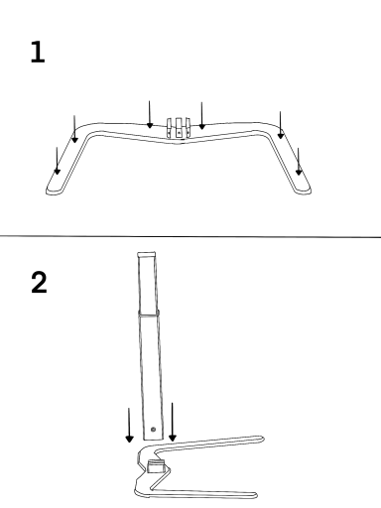
Flat‑pack construction and tool‑free assembly make the desk easy to set up, take down, and move between rooms or homes.
A clean, minimal aesthetic and durable materials help it blend naturally into both home and professional spaces, while still highlighting its playful mechanical innovation.
Proccess
User quotes
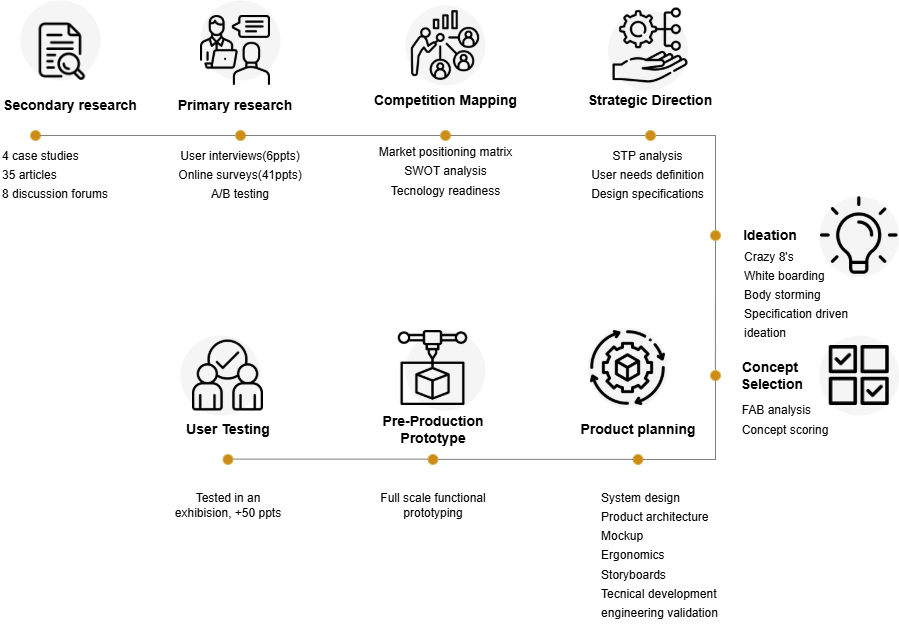
After our secondary research, we conducted user interviews to uncover pain points in the experience
‘‘In theory i can stand whenever i want, but cranking the desk up and down takes time and breaks my focus. Once i sit down, i usually stay there.’’
‘‘I like my current sit-stand desk, but i’d never take it with me when i move. Its heavy, and there are so many steps that disassembly and reassembly would propably take a lot of time.’’
‘‘I know standing is supposed to be better for me, but i only adjust the desk when i suddenly remember it. Most of the day i just stay seated and forget to change the height at all.’’
User scenarios
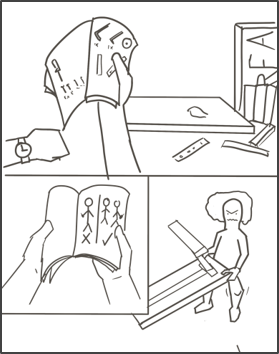
Created storyboards, to capture the real experience of assembling and moving a sit-stand desk, aligning the team on the key friction points to redesign
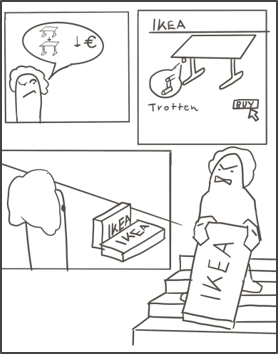
Purchase/ transport
Product weight
Assembly
Product weight
Time consuming process
Limited space available for assembly
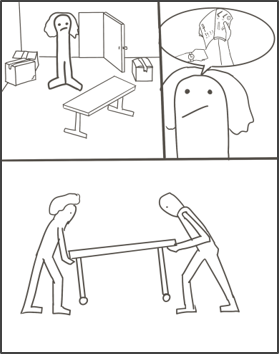
Relocation
Product weight
Dificult disassembly
Need for a second person
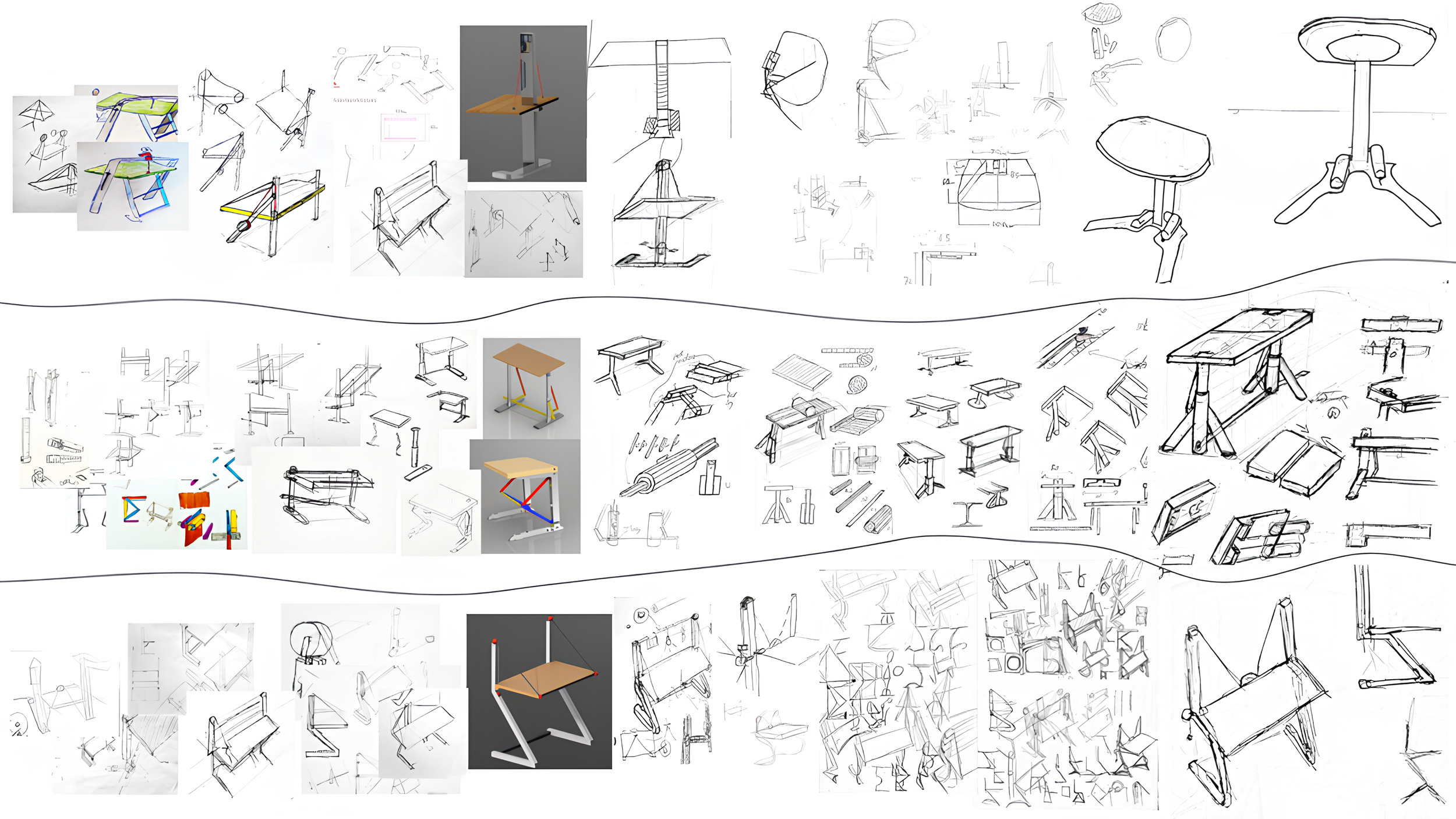
Ideation-key concepts
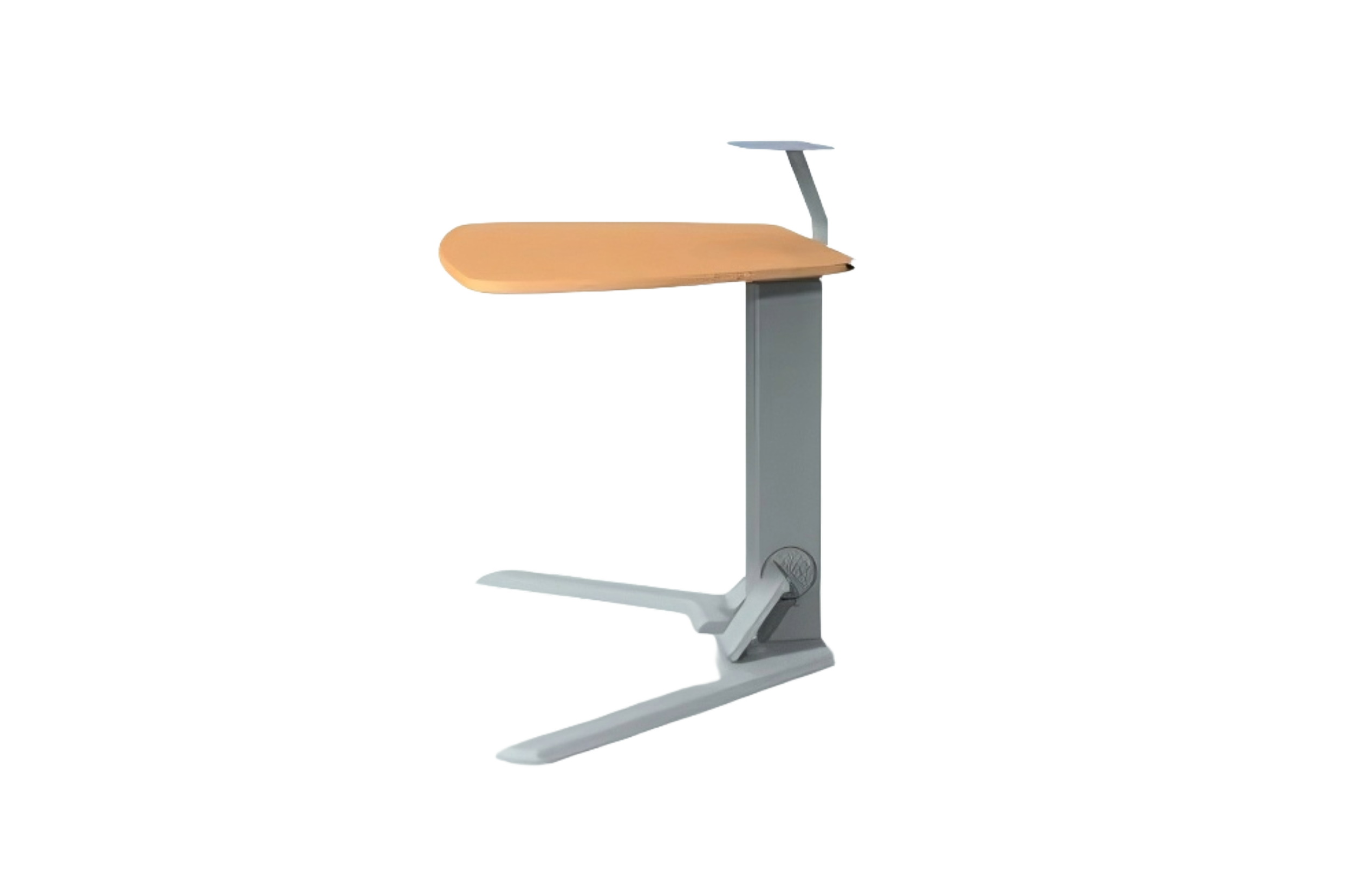
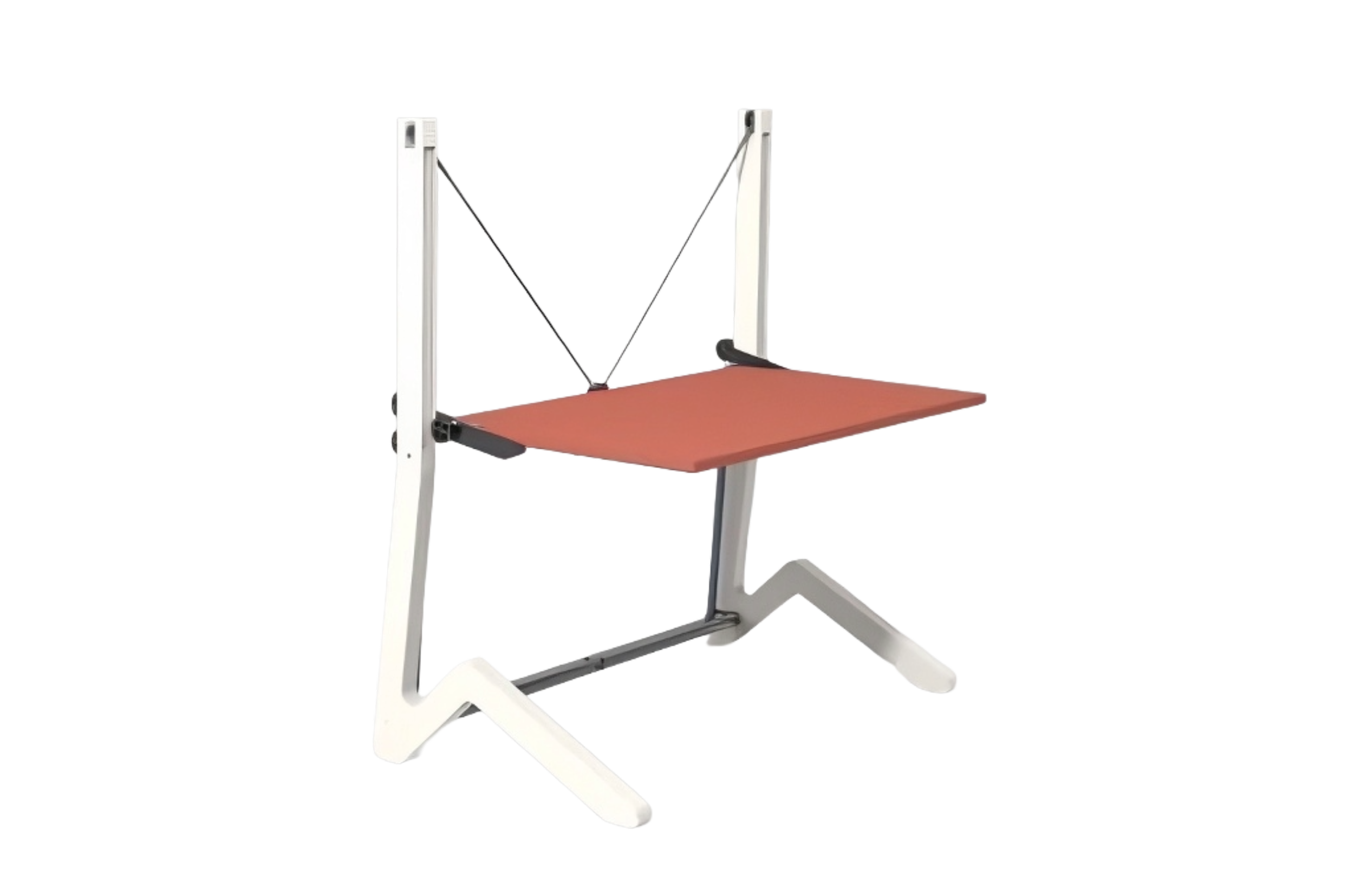
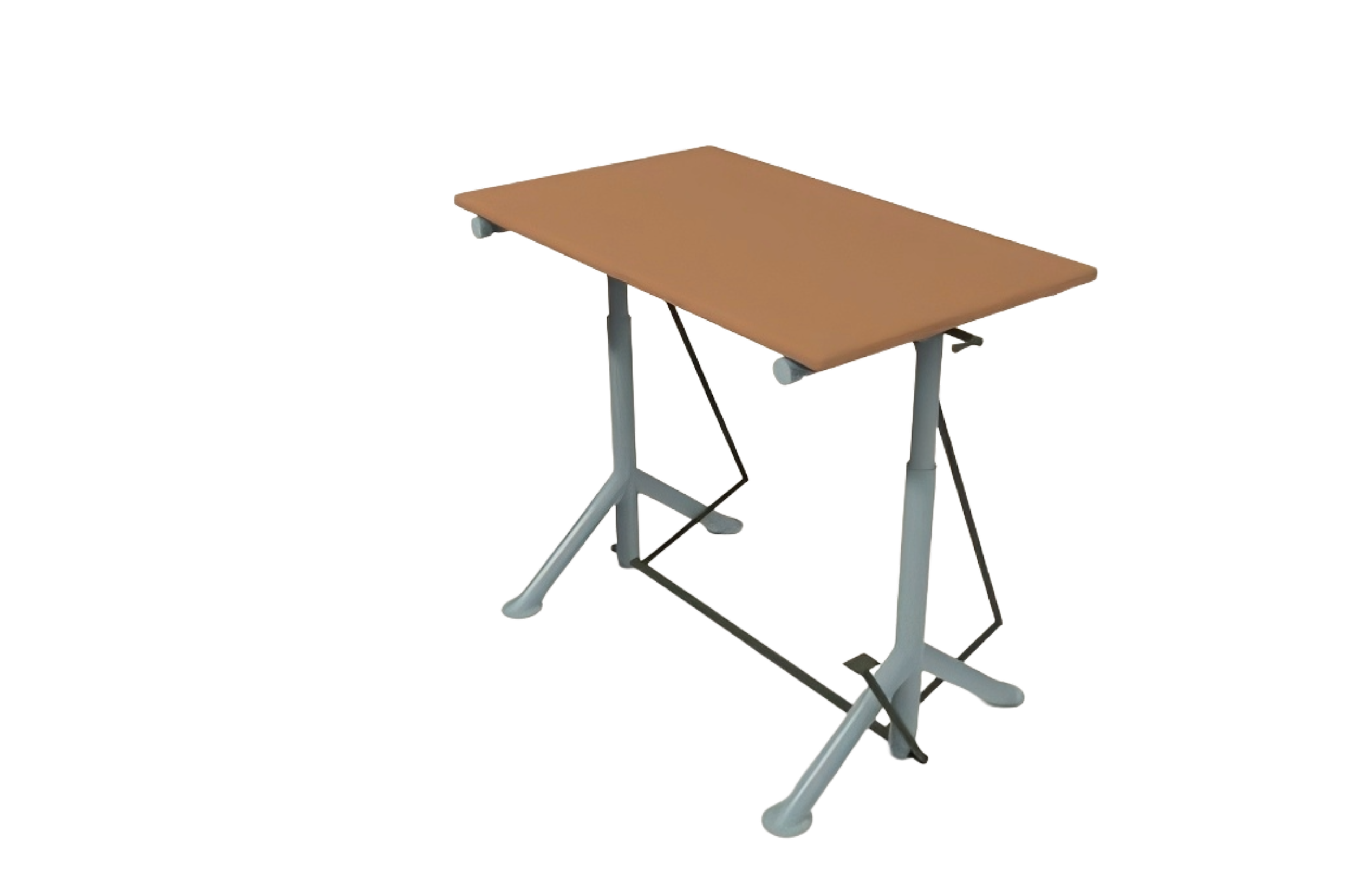
Following the mechanism and joint ideation, we converged on three core sit-stand concepts and developed them further in the ideation phase, grounded in insights from our user research
Final design
After evaluating the concepts with a scoring matrix, the ‘Pedals’ concept best met the design requirements and was selected
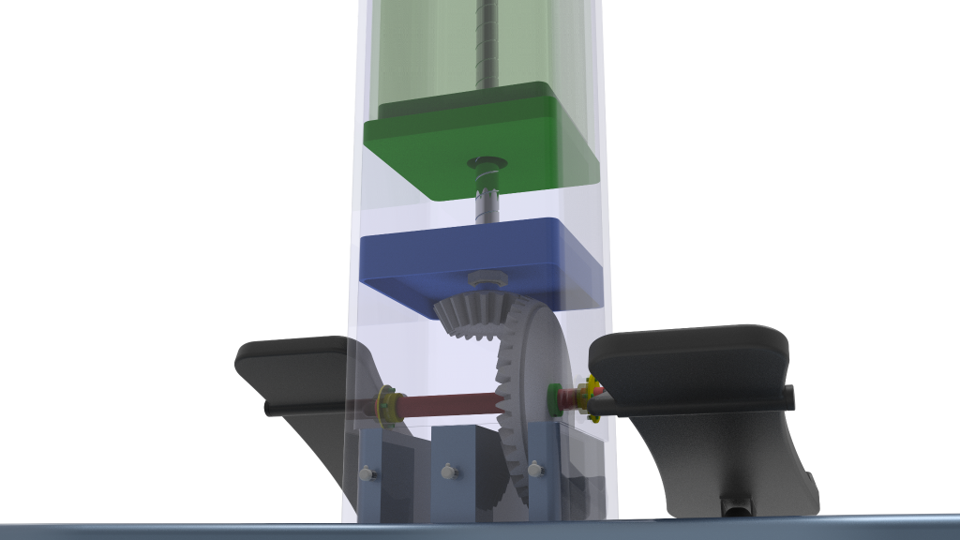
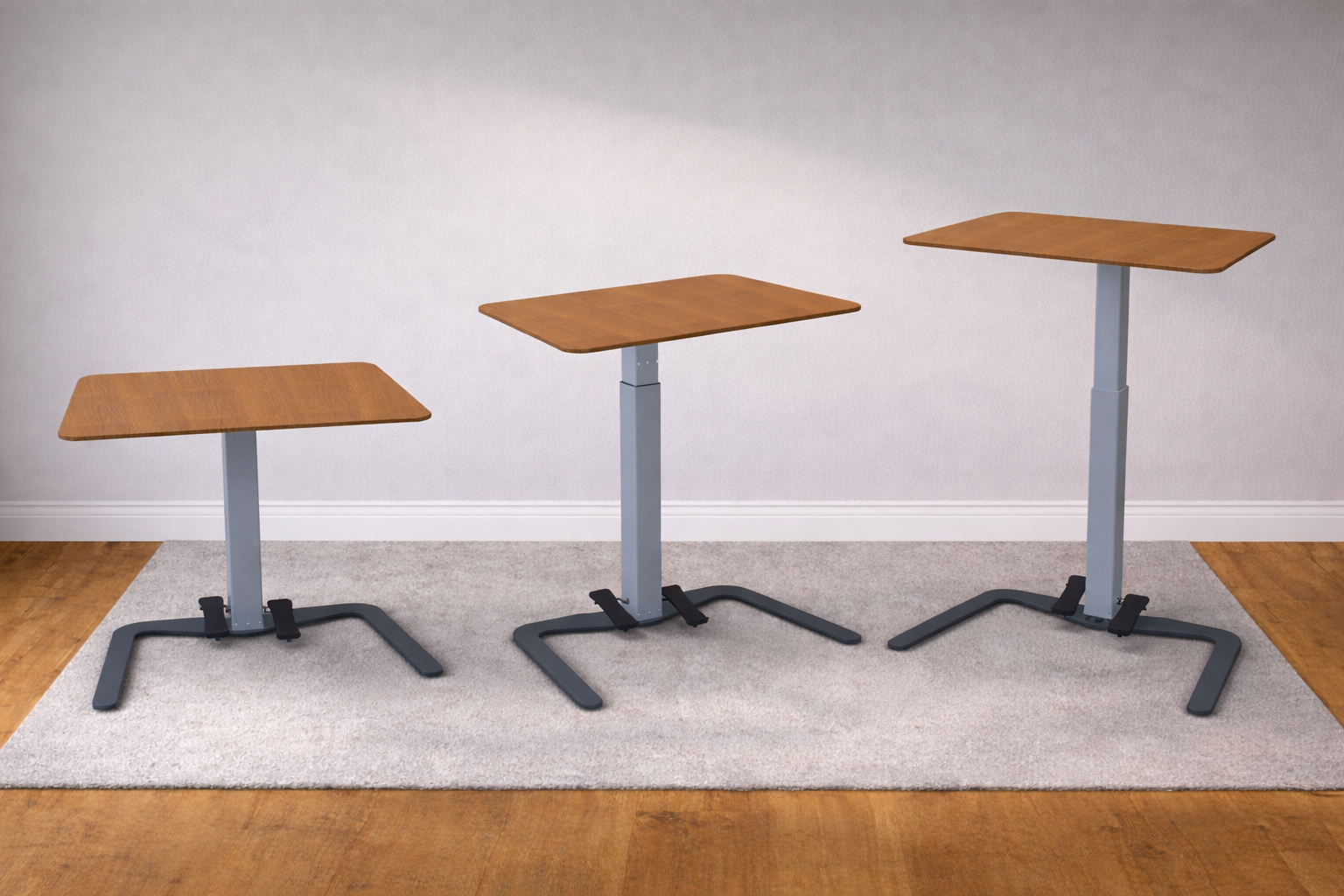
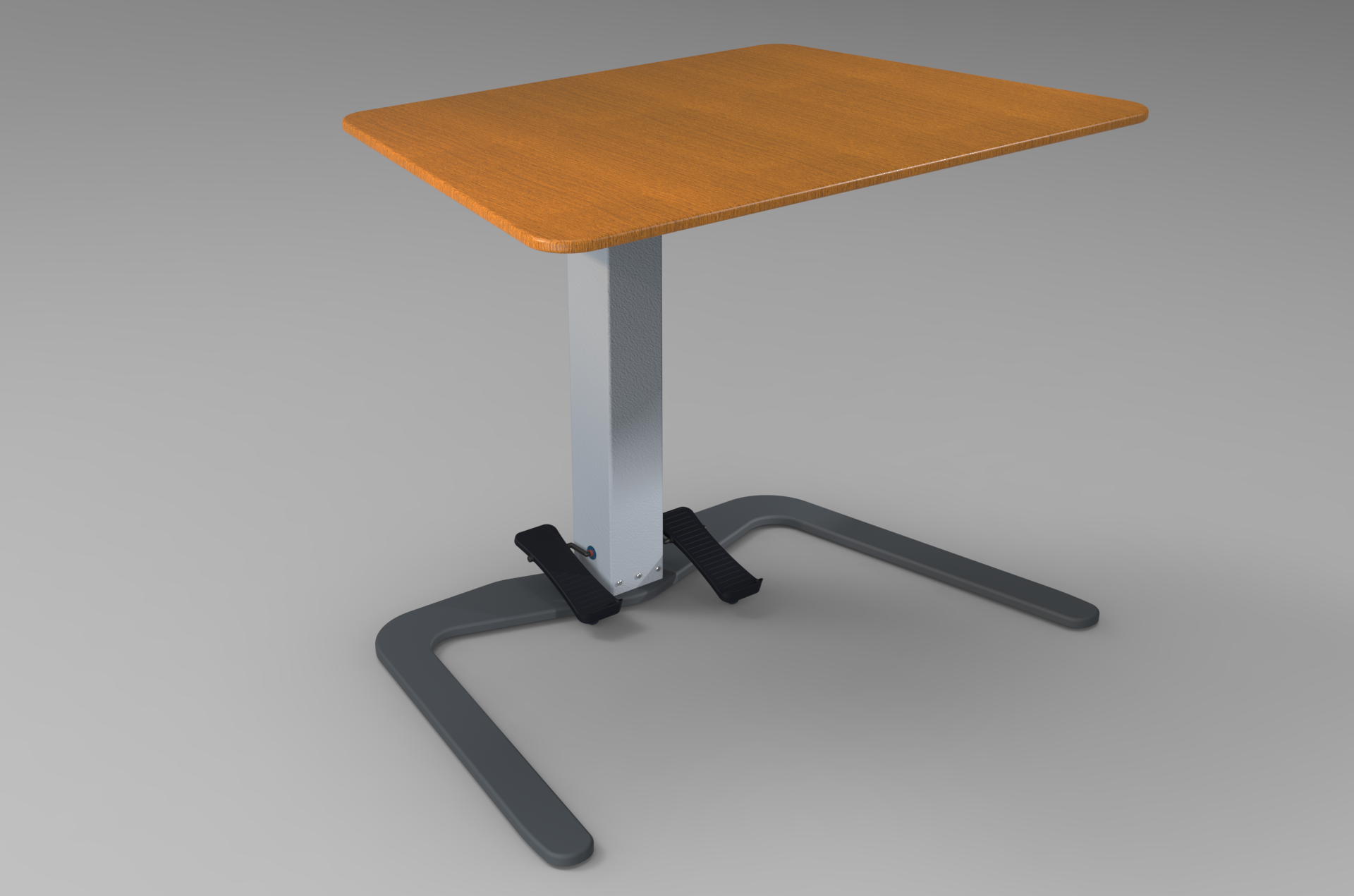
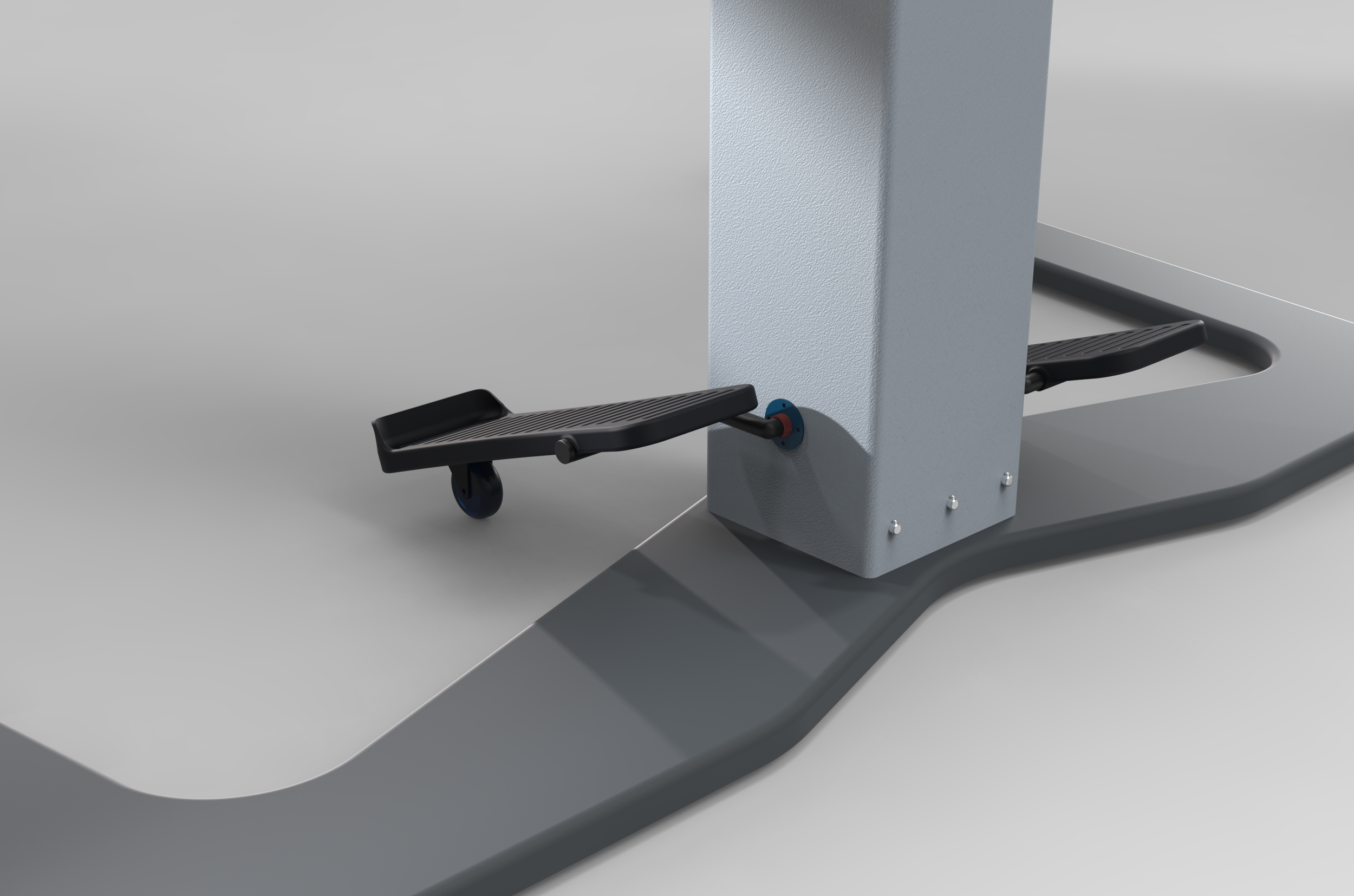
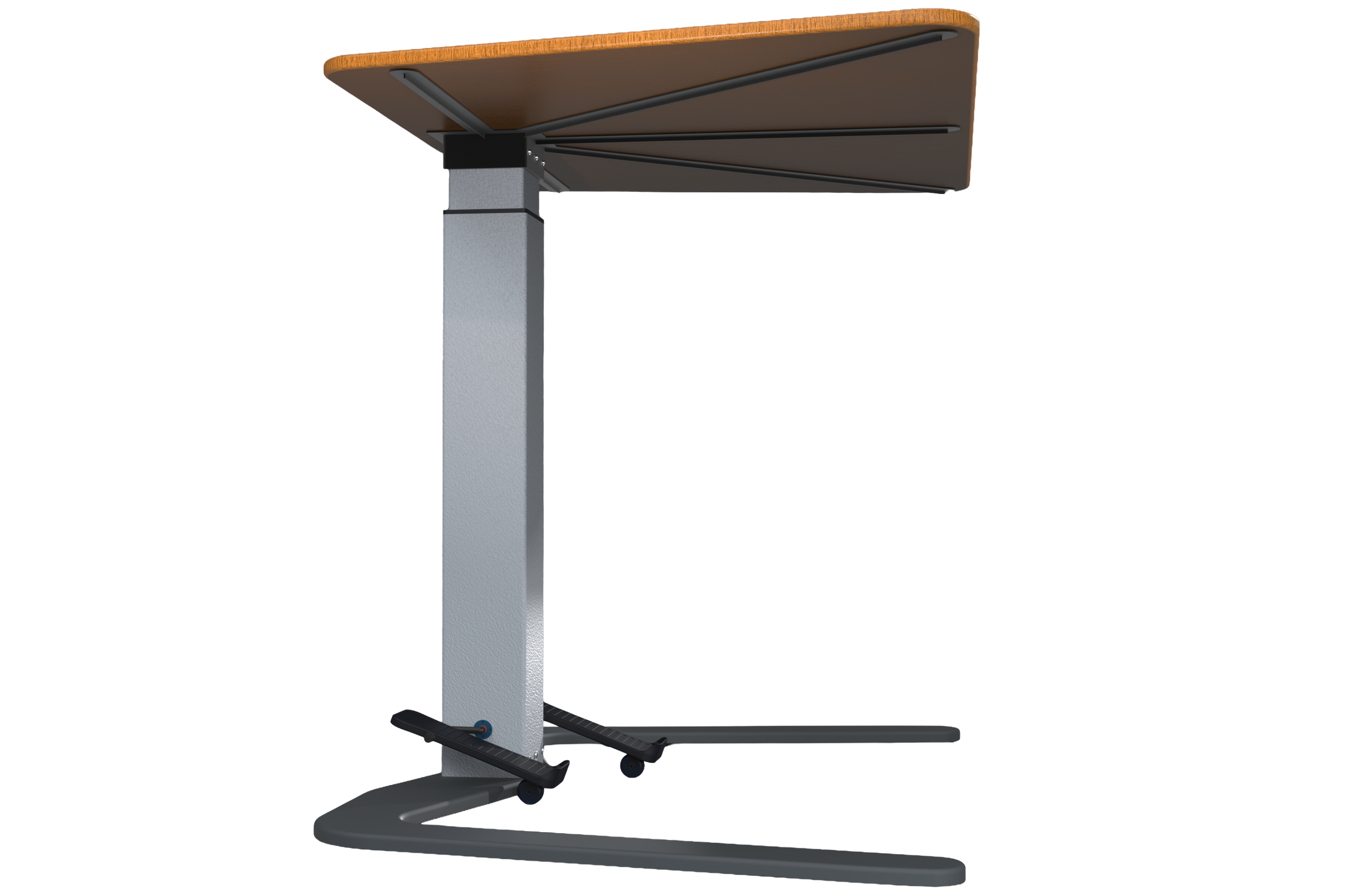
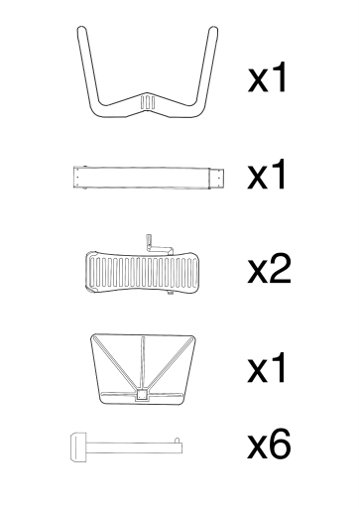
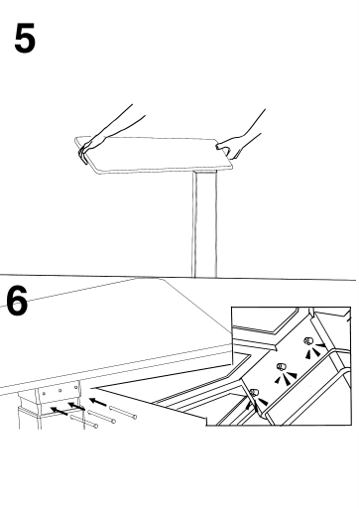
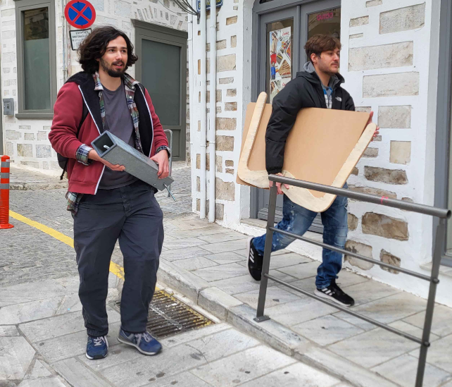
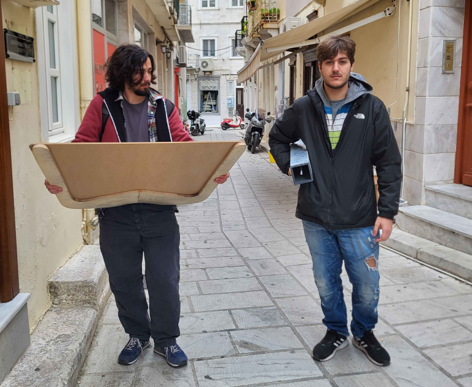
The desk breaks down into two main parts- the central colum and a combined top- and - base module that clips together, so users can carry two lighter pieces safely between rooms or homes
Flat Pack & transportation
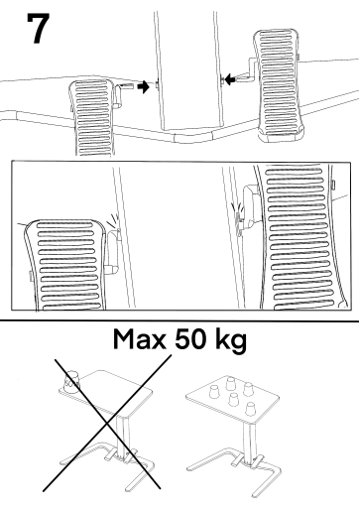
Flat bar supports were added to the design after the structural load analysis, so that the tensile loads are transferred more effectively through the main pillar of the desk. As a result, the desk safely carried a 50 kg load applied at the edge, without noticeable deformation or any stability issues.
Structural reinforcement & load testing
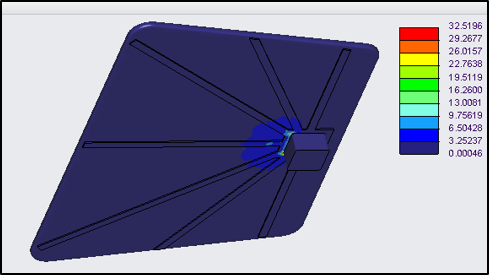
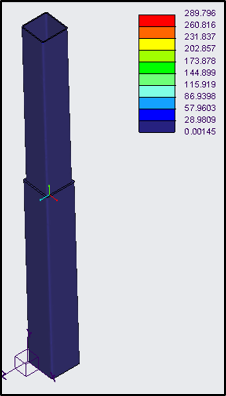
Tensile stress(MPa)
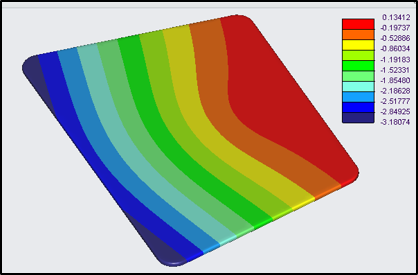
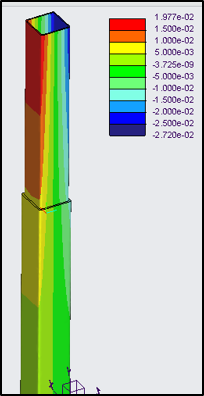
Deformation(mm)
Model Making
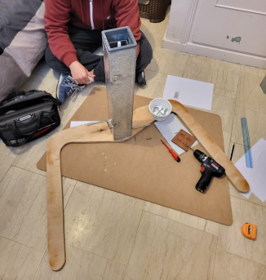
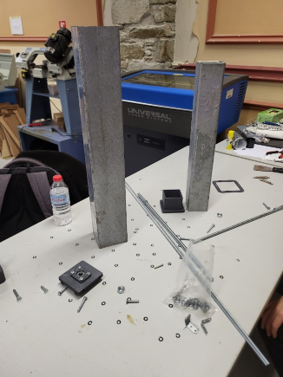
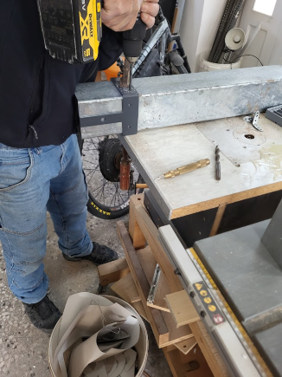
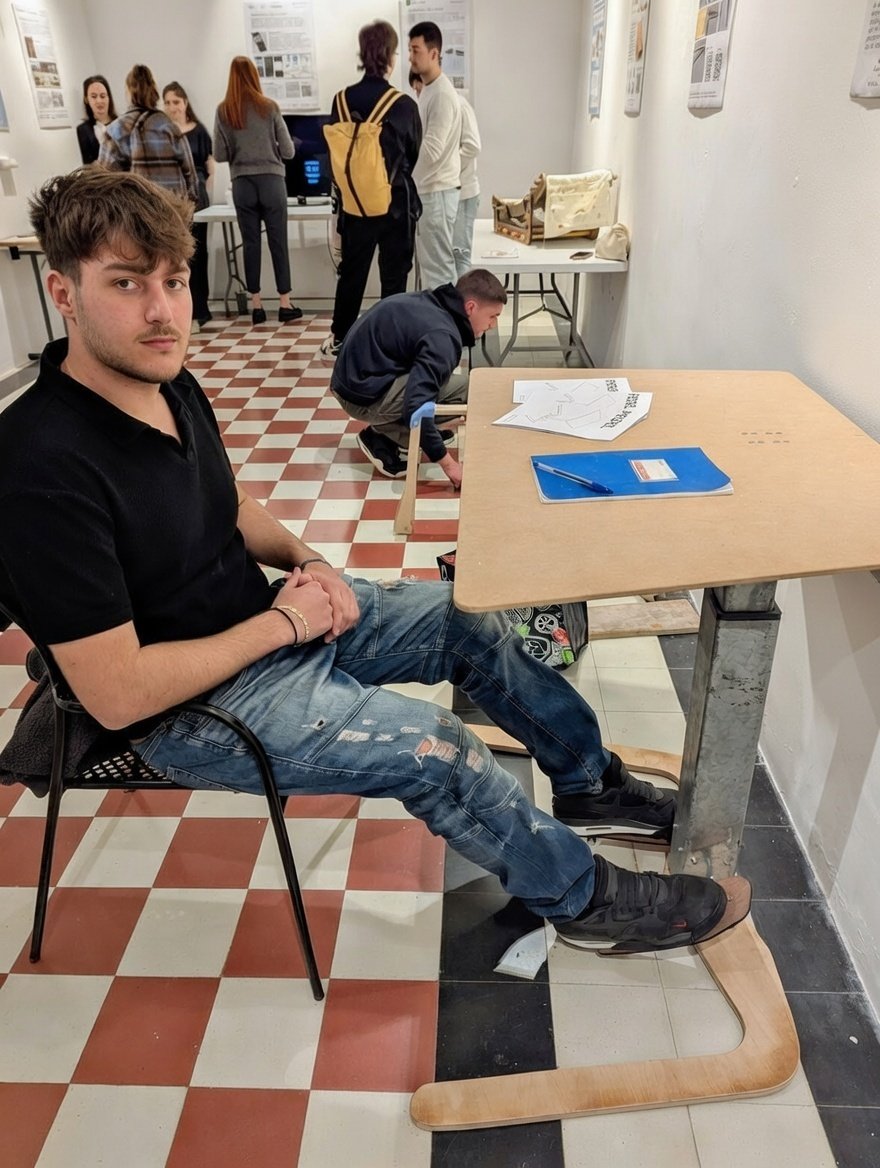
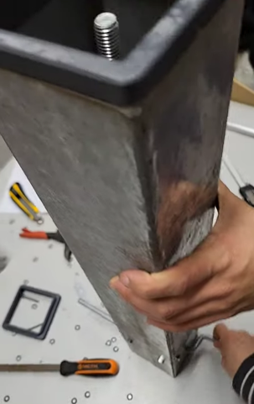
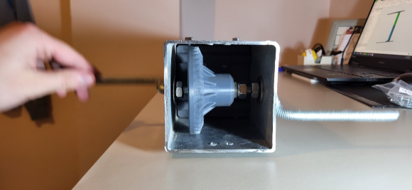
To test the final ergonomics and evaluate the design in a more realistic context, a physical model with limited functionality was built, allowing key interactions to be assessed even though not all mechanisms operated fully smoothly.
MANUAL